
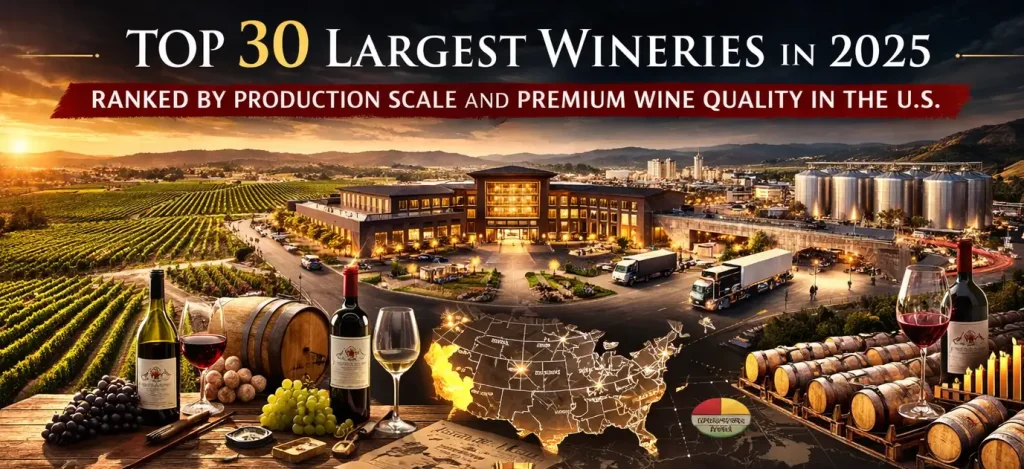
Top 30 Largest Wineries by Scale While Assessing Long-Term Quality Commitment
Sales volume does not automatically equal quality. Many of the largest wine businesses operate across multiple tiers, from entry-level labels to estate-driven luxury bottlings. This ranking isolates the 30 strongest names from the provided dataset based on premium positioning, estate ownership, vineyard control, and long-term winemaking credibility. Production volumes below reflect U.S. case sales based on the attached industry data.
1. The Duckhorn Portfolio
Annual U.S. Case Volume: 2.7 million cases
The Duckhorn Portfolio is widely regarded as one of the strongest premium wine platforms in the United States. Anchored in Napa Valley, the company built its reputation on estate-driven Cabernet Sauvignon and Merlot while expanding into high-quality Pinot Noir and Sauvignon Blanc programs. What separates Duckhorn from many large operators is its sustained focus on premium pricing tiers and vineyard acquisition in top appellations. The portfolio includes respected wineries that maintain distinct identities rather than functioning as mass-market labels. Vineyard sourcing is tightly controlled, and winemaking emphasizes structure, balance, and aging potential. Over time, Duckhorn has positioned itself as a serious fine-wine business rather than a volume-driven conglomerate. Its commitment to appellation transparency and consistent critical recognition reinforces its status as one of the highest-quality large wine businesses in the U.S.
2. Jackson Family Wines
Annual U.S. Case Volume: 6 million cases
Jackson Family Wines operates at significant scale, yet quality remains central to its long-term strategy. The company owns premium estates across Napa Valley, Sonoma County, Oregon, and select international regions. Rather than focusing purely on volume growth, Jackson Family has invested heavily in vineyard land within top appellations, allowing greater control over fruit quality and stylistic direction. Many of its wineries are estate-focused and positioned within the premium and luxury tiers. The portfolio includes respected Cabernet Sauvignon, Pinot Noir, and Chardonnay programs. Sustainability initiatives and long-term vineyard stewardship further strengthen its quality credentials. Although distribution reach is broad, the company maintains strong vineyard identity and winery-level distinction. This balance between size and estate-driven philosophy keeps Jackson Family Wines firmly positioned within the quality-oriented tier of large U.S. wine businesses.
3. Treasury Wine Estates
Annual U.S. Case Volume: 5.5 million cases
Treasury Wine Estates stands out for maintaining a strong luxury wine portfolio within a global corporate structure. The company controls premium labels operating at the high end of the market, including internationally recognized icons. Its strategy blends heritage branding with modern vineyard management and precise winemaking. Rather than competing primarily on price, Treasury emphasizes brand elevation and premiumization. Significant investment in vineyard holdings, winemaking technology, and long-term brand positioning supports its quality credentials. In the U.S., the portfolio includes serious Napa and Sonoma properties producing structured, age-worthy wines. Although Treasury operates at scale, the premium segment remains strategically central to its business model. This focus on higher-value wines rather than bulk production alone positions Treasury Wine Estates among the most quality-forward large wine enterprises operating in the American market.
4. Terlato Wine Group
Annual U.S. Case Volume: 600,000 cases
Terlato Wine Group has built its reputation on premium positioning and disciplined brand curation. Unlike bulk-oriented corporations, Terlato concentrates on estate wineries and high-end distribution partnerships. Its Napa Valley holdings reflect a commitment to terroir-driven Cabernet Sauvignon and structured wines capable of aging. The company also represents respected international estates, reinforcing its fine-wine identity. Terlato prioritizes vineyard control, limited production, and premium placement rather than mass-market expansion. Brand storytelling and luxury positioning are central to its strategy. By focusing on quality and maintaining distinct winery identities within its portfolio, Terlato has sustained credibility among collectors and fine-wine retailers. The company demonstrates that meaningful scale can coexist with premium discipline when vineyard quality and long-term brand development remain the priority.
5. Hess Persson Estates
Annual U.S. Case Volume: 570,000 cases
Hess Persson Estates emphasizes estate vineyards and mountain terroir, particularly in Napa Valley’s Mount Veeder appellation. By investing in hillside vineyards, the company aligns itself with structured, age-worthy Cabernet Sauvignon rather than fruit sourced broadly from flat valley floors. Estate control enables careful canopy management, harvest timing precision, and stylistic consistency. The portfolio reflects premium positioning rather than commodity competition. Winemaking balances power with refinement, aiming for wines capable of aging rather than immediate consumption alone. Sustainability initiatives and land stewardship practices further reinforce its quality credentials. Rather than pursuing aggressive volume growth, Hess Persson focuses on strengthening its estate identity and vineyard assets. This disciplined approach positions the company firmly within the premium Napa Valley segment and supports long-term quality credibility.
6. Domaine Chandon
Annual U.S. Case Volume: 700,000 cases
Domaine Chandon brings global sparkling wine expertise into the American market, producing traditional-method sparkling wines with technical precision and stylistic consistency. As part of an internationally recognized sparkling heritage, the winery emphasizes secondary fermentation in bottle, extended lees aging, and carefully managed blending protocols. Estate vineyard sourcing plays a critical role in maintaining fruit quality, particularly for Chardonnay and Pinot Noir. Rather than competing purely in volume-driven domestic sparkling categories, Domaine Chandon positions itself within the premium celebratory segment. Its wines focus on balance, texture, and structural finesse rather than sweetness or short-term appeal. Continuous investment in vineyard management and production technology reinforces quality control across vintages. This disciplined approach ensures Domaine Chandon maintains credibility within the premium U.S. sparkling wine landscape.
7. Stoller Wine Group
Annual U.S. Case Volume: 320,000 cases
Stoller Wine Group has become one of Oregon’s most respected wine businesses, rooted firmly in estate vineyards within the Willamette Valley. The company is particularly recognized for Pinot Noir and Chardonnay that reflect cool-climate precision and regional character. Estate ownership allows meticulous control over farming practices, including sustainability certifications and long-term soil management. Rather than expanding aggressively into volume categories, Stoller has pursued measured growth while maintaining stylistic discipline. Its wines consistently emphasize balance, acidity, and structural integrity rather than excessive extraction. The winery has also invested in modern facilities that enhance technical precision without compromising vineyard expression. This integration of estate farming, sustainability, and premium positioning strengthens Stoller’s reputation as a quality-driven regional leader within the broader U.S. wine market.
8. King Estate
Annual U.S. Case Volume: 300,000 cases
King Estate stands as one of Oregon’s largest family-owned wineries, yet its production model remains rooted in estate farming and sustainability. Located in the Willamette Valley, the winery is especially known for Pinot Noir and Pinot Gris sourced from its expansive vineyards. Organic farming practices and long-term land stewardship play central roles in its quality strategy. Estate control allows consistent management of yields, harvest timing, and vineyard health. Rather than pursuing rapid expansion into lower-priced segments, King Estate has concentrated on strengthening its premium brand identity. Its wines emphasize freshness, regional authenticity, and structured fruit expression. By integrating scale with disciplined viticulture and environmental responsibility, King Estate maintains a respected position among quality-focused American wine businesses.
9. Wente Family Estates
Annual U.S. Case Volume: 575,000 cases
Wente Family Estates represents one of California’s oldest continuously operated family wineries. Its longstanding presence in Livermore Valley and Monterey County has allowed refinement of vineyard selection and clonal development, particularly in Chardonnay. Estate farming remains central to its production philosophy, ensuring consistent fruit quality and stylistic control. Wente balances meaningful production scale with a clear focus on vineyard-driven expression. Over decades, the winery has built a reputation for reliability and varietal clarity within the premium California category. Continued investment in vineyard research and sustainable farming reinforces its long-term quality commitment. This combination of history, estate ownership, and disciplined winemaking secures Wente’s place among respected quality-oriented U.S. wine producers.
10. Rodney Strong Wine Estates
Annual U.S. Case Volume: 550,000 cases
Rodney Strong Wine Estates is closely tied to Sonoma County, where it has established a strong reputation for Cabernet Sauvignon, Chardonnay, and Pinot Noir. Vineyard holdings across key Sonoma appellations provide meaningful terroir expression and production consistency. Rather than relying heavily on bulk purchasing, Rodney Strong emphasizes estate farming and appellation transparency. Its premium tier wines demonstrate structured tannins and aging capacity, while maintaining balance and approachability. Investments in vineyard development and modern cellar technology support technical precision. Although distribution is broad, the winery’s identity remains grounded in Sonoma quality rather than mass-market positioning. This focus on vineyard integrity strengthens its long-term quality credibility.
11. J. Lohr Vineyards & Wines
Annual U.S. Case Volume: 1.3 million cases
J. Lohr Vineyards & Wines has built its reputation on estate-driven production across Paso Robles, Monterey County, and Napa Valley. Vineyard ownership gives the company significant control over canopy management, irrigation, and harvest timing. The winery is especially known for structured Cabernet Sauvignon and balanced Chardonnay programs. Rather than sacrificing structure for volume, J. Lohr maintains technical discipline and varietal clarity across its portfolio. Long-term vineyard investment supports consistent fruit quality and vintage reliability. While widely distributed, the brand has avoided becoming purely commodity-focused. Its ability to balance meaningful scale with estate control reinforces its premium positioning within the competitive U.S. market.
12. The Wonderful Company
Annual U.S. Case Volume: 600,000 cases
The Wonderful Company operates significant vineyard holdings in California and has positioned its wine division within the premium category rather than entry-level bulk production. The company’s investment strategy centers on large-scale vineyard ownership combined with modern winery infrastructure, enabling consistency and fruit quality control. Estate farming allows the business to manage yield levels, irrigation, and harvest scheduling without overreliance on outside growers. This level of integration strengthens stylistic reliability across vintages. The portfolio includes wines that emphasize California appellation identity, particularly in structured red blends and varietal Cabernet Sauvignon. While the company operates at substantial scale, its wine assets are strategically positioned above the commodity tier. The focus remains on brand building, vineyard management, and disciplined production standards. This operational structure supports quality consistency while benefiting from the financial stability and long-term planning capabilities of a diversified agricultural enterprise.
13. Hope Family Wines
Annual U.S. Case Volume: 750,000 cases
Hope Family Wines has emerged as one of Paso Robles’ most recognizable premium producers, building a strong reputation for Cabernet Sauvignon and Rhône-inspired blends. The company’s success has been driven by focused regional identity rather than unfocused national expansion. Vineyard sourcing is centered in Paso Robles, where warm days and cooling evening temperatures create concentrated fruit with balanced acidity. Hope Family’s wines tend to showcase bold structure and expressive aromatics while maintaining polish and technical refinement. The winery has steadily moved upward in price tiers, reinforcing its premium positioning in both retail and restaurant markets. Rather than diluting brand strength through excessive line extensions, Hope Family Wines concentrates on clear stylistic messaging and consistency. Its commitment to Paso Robles as a core identity has strengthened long-term brand equity and solidified its place among quality-focused California wine businesses.
14. Copper Cane Wines & Spirits
Annual U.S. Case Volume: 400,000 cases
Copper Cane Wines & Spirits focuses on premium California and Oregon appellations, producing bold, expressive wines that emphasize richness and varietal intensity. The company works closely with selected vineyard sites, prioritizing fruit quality and stylistic consistency. Its portfolio includes structured Cabernet Sauvignon and Pinot Noir programs positioned in the premium retail segment. Rather than competing in entry-level categories, Copper Cane has targeted consumers seeking higher-impact, full-bodied wines with modern branding. Investment in vineyard sourcing and careful harvest timing supports the winery’s emphasis on concentration and texture. Production decisions aim to balance power with drinkability, ensuring wines remain polished rather than over-extracted. While the company has grown relatively quickly, its strategy centers on maintaining premium positioning rather than scaling indiscriminately. This focused approach allows Copper Cane to sustain quality perception while expanding distribution in competitive U.S. markets.
15. Crimson Wine Group
Annual U.S. Case Volume: 400,000 cases
Crimson Wine Group operates a collection of estate wineries located in respected American appellations, including Napa Valley, Sonoma Coast, and Oregon’s Willamette Valley. Rather than consolidating brands under a single stylistic umbrella, Crimson preserves the individual character of each property. This decentralized model enables winemakers to focus on terroir expression specific to their vineyard sites. Estate ownership plays a critical role in ensuring fruit quality and vineyard control. The portfolio emphasizes premium varietals such as Cabernet Sauvignon and Pinot Noir, often sourced from hillside or cool-climate vineyards. By maintaining relatively modest production levels at each estate, Crimson supports authenticity and regional identity. The group’s long-term approach prioritizes vineyard investment and brand development over rapid expansion. This strategy reinforces credibility in the premium segment and positions Crimson Wine Group as a serious quality-focused wine enterprise rather than a volume-driven operator.
16. Ste. Michelle Wine Estates
Annual U.S. Case Volume: 3.6 million cases
Ste. Michelle Wine Estates has played a foundational role in establishing Washington State as a respected wine-producing region. With extensive vineyard holdings across Columbia Valley, the company benefits from strong control over grape sourcing and stylistic direction. Its premium programs emphasize Cabernet Sauvignon and Riesling, varietals well suited to Washington’s climate. Over time, Ste. Michelle has invested in modern winemaking facilities and vineyard research, strengthening consistency and technical quality. Although the business operates across multiple pricing tiers, its estate-driven properties maintain premium credibility. The scale of operations provides distribution strength, yet the core identity remains tied to Washington terroir. Structured reds with aging capacity and precise aromatic whites support its quality reputation. By combining regional focus with production expertise, Ste. Michelle maintains its standing as a significant quality contributor within the American wine landscape.
17. Foley Family Wines & Spirits
Annual U.S. Case Volume: 1.9 million cases
Foley Family Wines & Spirits owns and manages estate properties across Napa Valley, Sonoma County, and Santa Rita Hills. The company emphasizes vineyard specificity, particularly in cool-climate Pinot Noir and structured Cabernet Sauvignon. Estate ownership allows control over yield management and fruit selection, reinforcing premium positioning. Rather than operating as a single monolithic brand, Foley maintains distinct winery identities within its portfolio. Many of its wines are aimed at higher-end retail and restaurant placements, reflecting a deliberate move toward premium market segments. Investment in vineyard development and cellar infrastructure demonstrates long-term commitment rather than opportunistic expansion. Stylistically, the wines balance ripeness with structure, aiming for both immediate appeal and cellaring potential. Foley’s strategy highlights regional authenticity and disciplined production standards, placing it firmly within the quality-focused tier of American wine businesses.
18. Trinchero Family Wine & Spirits
Annual U.S. Case Volume: 17 million cases
Trinchero Family Wine & Spirits operates a broad portfolio that spans value to premium categories. However, within that structure, the company has developed significant premium assets, including respected Napa Valley holdings and sparkling wine properties. Estate acquisitions have strengthened its position in higher-end market segments. While entry-level brands contribute to overall revenue, Trinchero has demonstrated clear intent to expand its premium footprint. Vineyard investments and production upgrades support this upward trajectory. The company’s strategy reflects diversification while preserving room for quality-driven growth. Structured red wines and premium sparkling programs form an important part of its evolving identity. By balancing scale with selective premium development, Trinchero maintains relevance in quality conversations while benefiting from strong distribution infrastructure.
19. Constellation Brands
Annual U.S. Case Volume: 750,000 cases
Constellation Brands is one of the largest beverage alcohol companies in the United States, but within its wine division it maintains several premium and luxury-focused assets. While the portfolio spans multiple pricing tiers, strategic emphasis in recent years has shifted toward higher-margin, quality-driven labels. The company controls vineyard resources in key California appellations, enabling greater influence over grape sourcing and stylistic outcomes. Investment in brand elevation, packaging, and winemaking infrastructure reflects a deliberate premiumization strategy rather than reliance on commodity growth. Some of its properties produce structured Cabernet Sauvignon and refined cool-climate wines positioned in upper retail and restaurant segments. Although scale remains substantial, Constellation’s decision to streamline lower-end brands in favor of premium offerings signals a quality-oriented direction. Its ability to combine distribution power with targeted investment in vineyard-backed labels secures its place among influential wine businesses with serious premium credentials.
20. Martin Ray Winery
Annual U.S. Case Volume: 600,000 cases
Martin Ray Winery has built its reputation on producing site-driven wines from Sonoma County and Napa Valley. The winery emphasizes hillside and cool-climate vineyard sourcing, particularly for Cabernet Sauvignon and Pinot Noir. Rather than focusing on high-volume production, Martin Ray has cultivated a premium identity centered on structure, balance, and varietal clarity. Vineyard partnerships and estate sites allow for selective harvesting and careful fruit handling. Winemaking aims to preserve regional character while maintaining polish and aging potential. The winery’s Cabernet Sauvignon often reflects Sonoma’s balance of ripeness and acidity, while its Pinot Noir highlights site specificity and restraint. Over time, Martin Ray has strengthened its standing in the premium tier through consistent vintage performance and thoughtful vineyard expansion. Its disciplined growth strategy supports quality preservation rather than dilution through mass scaling.
21. Scheid Family Wines
Annual U.S. Case Volume: 760,000 cases
Scheid Family Wines operates extensive estate vineyards in Monterey County, a region known for cool-climate influences and long growing seasons. Vineyard ownership forms the backbone of Scheid’s quality strategy, providing direct control over farming practices and fruit selection. The company invests heavily in sustainable viticulture and technological precision, including soil mapping and irrigation management systems. This data-driven approach allows targeted yield control and consistent ripening patterns. Scheid’s portfolio spans multiple tiers, but its premium programs emphasize varietal integrity and balanced structure. Monterey’s climate supports vibrant acidity in Chardonnay and Pinot Noir, along with structured red varietals. Rather than relying heavily on purchased fruit, Scheid’s estate-driven model strengthens consistency across vintages. Its focus on vineyard control and sustainability enhances its reputation as a technically disciplined and quality-oriented producer within California’s competitive wine market.
22. Bonterra Organic Estates
Annual U.S. Case Volume: 1 million cases
Bonterra Organic Estates distinguishes itself through its long-standing commitment to organic and regenerative farming practices. Estate vineyards are managed without synthetic pesticides or herbicides, emphasizing soil health and biodiversity. This farming philosophy directly influences grape quality and long-term vineyard sustainability. Bonterra’s wines often display clean varietal expression supported by balanced acidity and moderate alcohol levels. Rather than competing in bulk value categories, the brand positions itself in the premium organic segment, appealing to consumers seeking environmental responsibility alongside quality. The winery’s dedication to certified organic viticulture enhances its credibility in a market increasingly attentive to sustainability standards. By integrating farming ethics with consistent winemaking execution, Bonterra maintains a quality-focused identity rooted in environmental stewardship rather than industrial scale production.
23. Bogle Family Wine Collection
Annual U.S. Case Volume: ~2.7 million cases
Bogle Family Wine Collection has earned respect for delivering strong quality-to-price performance across its portfolio. Family ownership remains central to the company’s identity, with vineyard holdings primarily located in California’s Clarksburg and surrounding regions. Estate farming provides control over yields and harvest decisions, supporting consistent fruit quality. While widely distributed, Bogle avoids sacrificing structure and varietal clarity for aggressive volume growth. The winery’s Cabernet Sauvignon, Petite Sirah, and Chardonnay programs demonstrate reliable balance and technical precision. Over time, Bogle has carefully expanded production without eroding brand trust. Its wines consistently perform above expectations within their price tiers, reinforcing a reputation built on disciplined farming and steady winemaking practices. This commitment to consistency and value-backed quality secures Bogle’s position among reputable American wine businesses.
24. Wagner Family of Wine
Annual U.S. Case Volume: ~1.0 million cases
Wagner Family of Wine is best known for its flagship Napa Valley Cabernet Sauvignon programs, which have achieved significant market recognition. Estate vineyards in Napa Valley allow the company to manage fruit sourcing with precision. The wines typically emphasize concentration, ripeness, and structured tannins, appealing to consumers who favor bold California styles. While the brand enjoys broad popularity, its core premium labels maintain strong pricing power and distribution strength. Estate control supports consistency in harvest timing and vineyard practices. The company’s strategic focus on brand identity and stylistic clarity has enabled it to sustain demand even in competitive premium segments. By aligning vineyard resources with disciplined winemaking, Wagner Family maintains a prominent presence in quality-driven Cabernet Sauvignon production.
25. Delicato Family Wines
Annual U.S. Case Volume: 5.3 million cases
Delicato Family Wines has evolved from a value-oriented California producer into a business with increasingly serious premium ambitions. While it maintains broad distribution across multiple price tiers, the company has strategically invested in higher-end vineyard properties and brand elevation over the past decade. Estate holdings in Napa Valley and Monterey County give Delicato more direct control over grape quality, harvest decisions, and yield management. This vertical integration strengthens stylistic consistency and allows for more focused premium programs, particularly in Cabernet Sauvignon and structured red blends. Rather than relying solely on volume-driven supermarket labels, Delicato has repositioned segments of its portfolio to compete in the premium retail and restaurant space. Investment in modern winemaking facilities and vineyard development demonstrates long-term planning rather than opportunistic scaling. Although the company operates at significant size, its upward premium shift reflects a deliberate move toward quality credibility within the competitive California wine landscape.
26. Boisset Collection
Annual U.S. Case Volume: ~500,000 cases
Boisset Collection operates an expansive portfolio of estate wineries across Napa Valley, Sonoma County, and Burgundy, blending heritage storytelling with vineyard-driven production. Unlike purely industrial operators, Boisset emphasizes estate identity and terroir differentiation within its properties. Many of its California holdings are located in respected appellations, allowing focused production of Cabernet Sauvignon, Pinot Noir, and Chardonnay with site expression in mind. Estate vineyard management provides control over farming decisions and fruit quality, reinforcing stylistic consistency. The company combines traditional winemaking philosophies with modern cellar technology, aiming for structured wines that retain regional character. While marketing and brand presentation are central to Boisset’s approach, its quality credentials are rooted in vineyard ownership and disciplined production. By preserving distinct winery personalities rather than consolidating them into generic labels, Boisset sustains a premium identity that balances commercial sophistication with genuine terroir focus.
27. Korbel Champagne Cellars
Annual U.S. Case Volume: 1.6 million cases
Korbel Champagne Cellars holds a distinctive position within American sparkling wine production. Based in Sonoma County, the winery focuses on traditional method sparkling wines, emphasizing secondary fermentation in bottle and extended lees aging to build texture and complexity. While production volumes are considerable, Korbel maintains technical discipline in its sparkling programs, ensuring consistent mousse, balance, and freshness. Estate vineyard sourcing plays an important role in supporting fruit quality, particularly for Chardonnay and Pinot Noir used in its blends. The winery’s long history in California sparkling production has allowed refinement of blending techniques and quality control standards over time. Rather than competing strictly in low-cost sparkling categories, Korbel positions its wines as reliable celebratory options with craftsmanship credibility. Its specialization in a technically demanding wine style reinforces its quality standing within the domestic sparkling segment.
28. Riboli Family Wines
Annual U.S. Case Volume: ~4.5 million cases
Riboli Family Wines is a family-owned California producer with estate vineyards in Paso Robles and Monterey County. The company’s structure emphasizes vineyard ownership and long-term agricultural stewardship rather than dependence on fluctuating bulk grape markets. This approach allows greater control over fruit quality, harvest timing, and stylistic direction. Riboli’s portfolio includes varietal wines that highlight California ripeness balanced by structured acidity. Over time, the company has gradually strengthened its premium tiers, focusing on Cabernet Sauvignon and other red varietals suited to Paso Robles’ climate. Family leadership provides continuity in vineyard strategy and brand positioning, supporting stable quality standards across vintages. While it does not operate at the luxury icon level of Napa’s most elite estates, Riboli maintains a disciplined approach to farming and winemaking that sustains its reputation as a credible, quality-oriented California wine business.
29. Precept Wine
Annual U.S. Case Volume: ~2.3 million cases
Precept Wine manages a diverse portfolio of wineries across Washington State, Oregon, and California. The company’s model combines regional sourcing with structured brand development, allowing each winery within the portfolio to maintain its own stylistic identity. Washington State holdings are particularly important, benefiting from Columbia Valley’s structured red wine potential and balanced acidity in white varietals. While Precept operates at meaningful scale, its premium programs focus on varietal clarity, vineyard partnerships, and controlled production standards. The company emphasizes consistency and market positioning in the mid-to-premium range rather than ultra-luxury experimentation. By maintaining regional specialization within its portfolio, Precept avoids blending all labels into a generic mass-market identity. Its quality credentials are strongest where estate vineyards and focused appellation programs support long-term brand stability.
30. John Anthony Wine & Spirits
Annual U.S. Case Volume: ~600,000 cases
John Anthony Wine & Spirits operates with a clearly defined premium orientation rooted in Napa Valley. Estate vineyards and selective sourcing provide the foundation for structured Cabernet Sauvignon and refined Chardonnay programs. The winery emphasizes controlled yields, careful barrel aging, and polished tannin management to produce wines positioned in higher retail and restaurant tiers. Unlike large conglomerates balancing multiple value brands, John Anthony maintains a focused portfolio centered on premium Napa expression. Vineyard specificity and small-lot production strengthen its quality perception among collectors and direct-to-consumer buyers. Distribution strategy leans toward controlled channels rather than mass-market saturation, preserving brand positioning. By concentrating on Napa Valley identity and disciplined winemaking techniques, John Anthony sustains a quality-driven reputation within one of the most competitive fine wine regions in the United States.
Wine Insights
